
Ordering & Menu Management
Front Line to Kitchen. Fully digital. Fully Connected.
Manual ordering creates errors, slows service, and weakens dietary and allergen control. Safely replaces fragmented processes with connected ordering and menu governance.
The Problem
Handwritten tickets get lost. Menu changes don’t update consistently. Dietary and allergen controls rely on memory. Stock and demand stay disconnected.
What Safely Does
Safely digitises ordering and menu management and connects it to inventory, compliance, workflows and reporting so ordering becomes a controlled operational system.
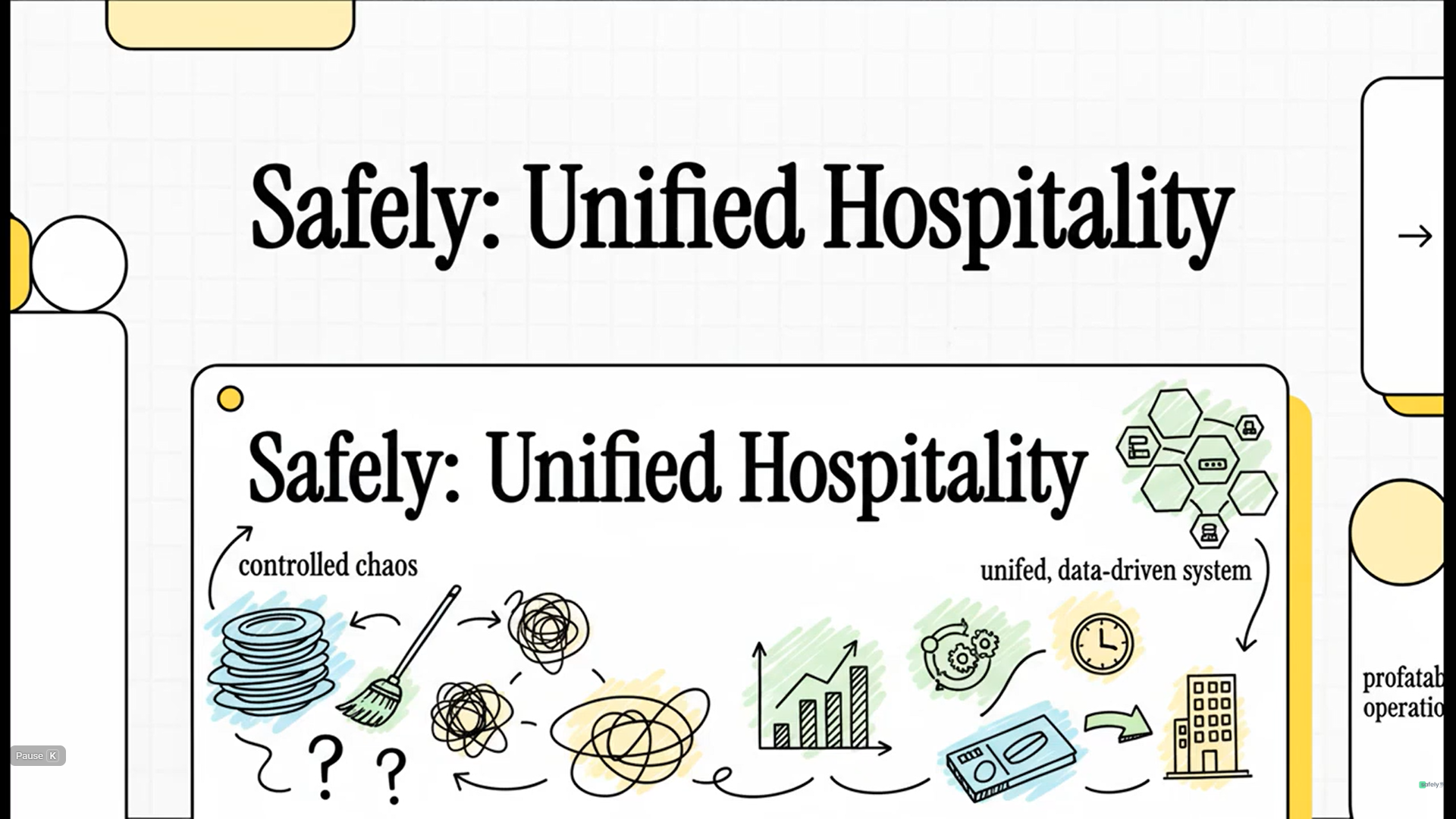
Unified Operations. Less Waste.
Download the brochure to see how Safely connects ordering, product inventory, menu management, and digital HACCP into a single ecosystem, helping your team eliminate disconnected paperwork and build a profitable, audit-ready operation.
How It Works
Step 1
Digital Order Capture
Capture orders digitally at the point of service.
Step 2
Instant Kitchen Routing
Route instantly to kitchen with full context.
Step 3
Central Menu Governance
Update menus centrally with consistent site execution.
Step 4
Analyse Performance
Analyse performance, waste and demand patterns.
Integrated Components
Order Management
Digitise ordering from customer or resident to kitchen. Fully connected, fully controlled.
Who It’s For
Digitise ordering. Connect your kitchen. Optimise performance.
Book a demo to see how Safely supports Order & Menu Management.
Book a Demo to Explore Order & Menu Management
Ordering & Menu Management FAQs
Manual ordering—which often relies on paper sheets, WhatsApp messages, and disconnected spreadsheets—creates a cycle of either over-ordering (causing spoilage) or under-ordering (causing stockouts and "86s") . It also generates a massive "paperwork universe" of outdated supplier catalogues, delivery notes, and disjointed HACCP logs , . Without a single source of truth, teams often default to ordering "buffer stock" to feel safe, which ultimately leads to excess waste when demand drops.
Poor demand planning and a lack of inventory discipline are massive drivers of financial loss. In the UK alone, hospitality and food service food waste costs approximately £3.2bn per year, which averages out to ~£10k per outlet annually , . Beyond direct waste, poor ordering also results in lost sales from stockouts, margin erosion from emergency buys, and high administrative labour costs.
Safely unifies your operations by providing a fully integrated ordering system linked directly to your Product Inventory and Menu Management , . Instead of ordering from memory or visual checks, your sites order based on live stock reality . The system enforces consistent par levels, surfaces expiring stock before more is purchased, and centralises product catalogues across all locations.
When menu items are linked directly to ingredients and stock depletion in Safely, you gain total visibility into your true theoretical usage versus actual depletion . This allows you to easily pinpoint which specific menu items are driving spoilage—whether through over-preparation or low demand—so you can adjust your menu design and prep volumes to eliminate waste.
In traditional manual setups, unrecorded supplier substitutions can silently alter allergen profiles and ingredient specifications, increasing compliance risks . Safely captures deliveries and logs discrepancies and substitutions centrally so they are immediately reflected in your product and allergen records.
Yes. Safely features Owlbert AI, which analyses your unified inventory, ordering, and menu data to deliver forward-thinking insights . Owlbert AI predicts peak customer demand periods by analyzing dayparts, seasons, and weather patterns . It also optimises your par levels by detecting "par drift" (repeated leftovers vs. repeated stockouts) and recommends dynamic reorder cadences that account for supplier lead times.
Absolutely. In manual systems, missing delivery temperature checks often force teams to "discard-by-default" just to be safe . Safely integrates Digital HACCP inside the exact same ecosystem as your ordering and inventory . Delivery temperature checks are immediately linked to the received products, allowing you to seamlessly trace food from its delivery, through its storage conditions, right up to service.