
Occupancy Sensing
From Footfall to Smart Spaces
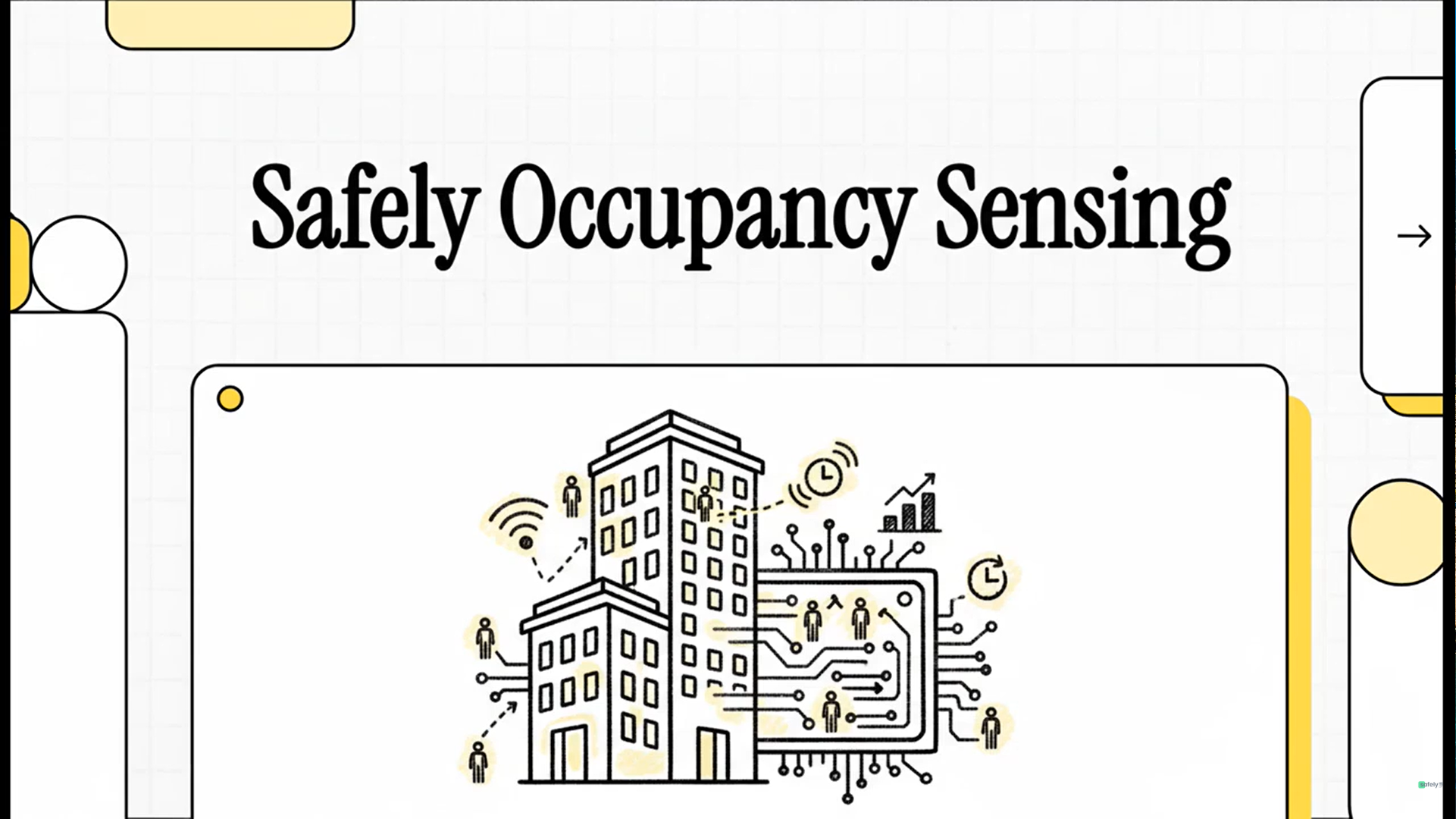
Occupancy Sensing is Safely’s capability for understanding how spaces are used in real time, how many people are present, when they arrive/leave, and how usage patterns change over time so organisations can optimise energy, safety, staffing, cleaning, and space utilisation. By connecting occupancy signals into Safely workflows (tasks, alerts, reporting, and AI insight), businesses move from fixed schedules and assumptions to data-driven, demand-led operations.
How It Works
Step 1
Sense & Measure Occupancy
Occupancy data is captured from room/zone sensors (e.g., presence, people count, entry/exit flow) and mapped to locations like rooms, floors, zones, and buildings.
Step 2
Interpret & Contextualise
Safely links occupancy signals to operational context, opening hours, service periods, work schedules, event calendars, and site policies so “busy” and “quiet” are measured consistently across the estate.
Step 3
Automated Control
Occupancy triggers actions such as lighting or HVAC adjustments, cleaning and inspection tasks, security escalation for unexpected presence, or alerts for overcrowding thresholds.
Step 4
Report & Optimise
Dashboards and analytics show utilisation, peak times, dwell time, and out-of-hours presence enabling optimisation of energy schedules, staffing plans, and space allocation.
Core Features
Real-time Occupancy & Footfall Visibility
Safely tracks presence and flow by room, zone, and site to show where people are and when.
Energy Optimisation
Occupancy signals can drive lighting/HVAC schedules to reduce wasted runtime in unoccupied spaces.
Threshold Alerting & Triggers
Set occupancy thresholds to trigger alerts for overcrowding, restricted areas, or out-of-hours presence.
Reporting & Analysis
Measure peak times, occupancy patterns, and space utilisation to guide operational planning and investment decisions.
Solution Area's
Make Every Space Measurable.
Book a demo to see Occupancy Sensing in real time.